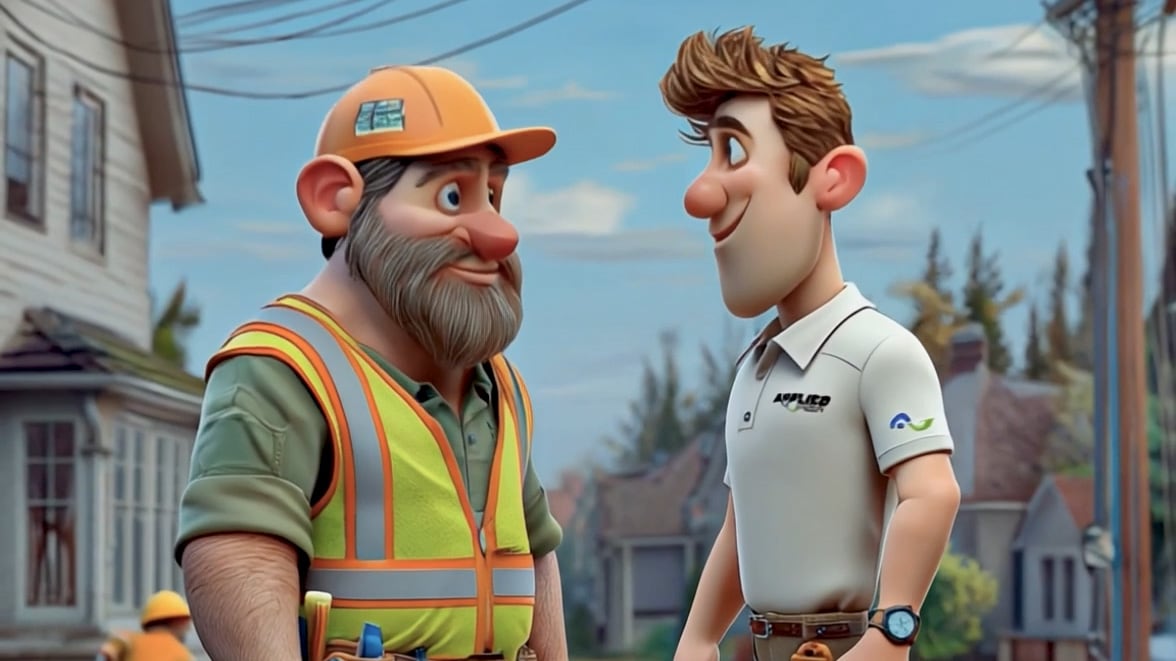
This project wasn’t about what AI can do. It was about what still requires a human hand — story, restraint, and knowing when not to do more.
The Setup
Walk-Through Bethlehem is a live church event designed to help families step into the story of Christmas — not just hear it. The video needed to reflect that same spirit: immersive, reverent, and grounded. Not flashy. Not modern. And definitely not “AI-looking.”
The Idea
Rather than treating this as an AI experiment, I approached it the same way I would any traditional video project — by starting with story.
The core concept was simple: the feeling of going back in time.
Not time travel in a sci-fi sense, but the quiet emotional shift of leaving the present and stepping into another place and moment. That idea shaped everything that followed — the dialogue, the pacing, the visuals, and the restraint.
The Process
Even though AI tools were used for generation, the workflow stayed very traditional.
• I Wrote the narrative and dialogue first
• Defined the emotional arc before visuals existed
• Storyboarded the piece shot-by-shot
• Planned camera movement, framing, and transitions as if I were physically shooting it
Only after that groundwork was in place did I begin generating visuals.
Why AI Made Sense Here
Instead of loose prompts, I wrote tightly controlled instructions — more like a production brief than a prompt.
Each shot had clear intent, defined motion limits, and explicit rules about what could not change
AI has a tendency to embellish, reinterpret, or “improve” things. For this project, that behavior worked against the goal. So constraints mattered. Motion was kept subtle. Transitions were restrained. Atmosphere came from pacing, not effects.
When the AI broke the rules, I revised the direction — the same way a director would reset a shot or give new notes.
The Result
The final video supported the event without drawing attention to itself. It felt calm, cinematic, and appropriate to the message — serving the story instead of competing with it.
More importantly, it established a repeatable workflow: AI as a production tool, guided by a director’s mindset.